
Accurate Perforating manufactures custom perforated metal sheets, panels, plates, and coils for architectural, industrial, OEM, and specialty applications. From standard round-hole patterns to complex custom designs, we help customers select the right material, pattern, open area, thickness, finish, and fabrication approach for the job.
Perforated metal can do a lot in a single sheet or coil. It can improve airflow, reduce weight, control light, support filtration, manage sound, provide screening, and add visual interest to a finished product or building system. The key is matching the material and perforation pattern to the application.
That is where our team comes in. Accurate Perforating brings decades of perforating experience, a wide range of tooling, and practical manufacturing knowledge to help turn your drawings, specifications, or performance goals into finished perforated metal components.
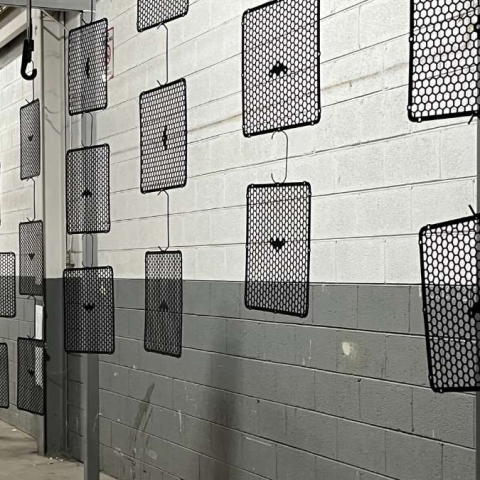
What Is Perforated Metal?
Perforated metal starts as a sheet or coil that is fed into a punching press. These presses are designed for speed and efficiency, giving you all-across perforated capabilities at more than 2,000 strokes per minute. These openings, or holes, are engineered to meet specific functional or aesthetic requirements. Once processed, the material can be cut to length or recoiled.
A perforated panel may look simple from a distance, but the details matter. Hole size, hole shape, pattern spacing, open area, material grade, sheet thickness, finish, margins, and fabrication requirements all affect how the final product performs.
A panel used for an architectural façade may need a specific appearance, open area, and finish. A perforated sheet used in filtration may need precise hole sizing and repeatability. A data center component may need airflow, strength, and consistent quality across production runs.
Perforated metal works best when those details are considered early.
Material Options
Choosing the right material is one of the most important steps in any perforated metal project. The material affects strength, corrosion resistance, weight, appearance, formability, cost, and long-term performance.
Accurate Perforating works with a broad range of materials, including:
- Aluminum
- Stainless steel
- Mild steel
- Galvanized steel
- Corten steel
- Brass
- Copper
- Iron
- Nickel alloys
- Perforated plastics and other specialty materials
Each material (listed in the menu below) offers distinct advantages. Aluminum is lightweight, corrosion-resistant, and often used in architectural and decorative applications. Stainless steel offers strength, clean aesthetics, and corrosion resistance for demanding environments. Mild steel provides durability and cost efficiency for industrial applications. Galvanized steel is often selected for outdoor use. Corten steel creates a weathered appearance while maintaining long-term performance. Brass and copper can deliver a premium visual finish for architectural and interior design projects.
If you are not sure which material is best for your application, our team can help evaluate the environment, performance needs, budget, and design goals before production begins.
Patterns
Perforated metal can be manufactured in a wide range of hole shapes and layouts. Pattern selection affects airflow, visibility, light transmission, sound control, drainage, strength, and appearance.
Round Hole Patterns
Round-hole perforated metal is the most common and versatile perforated metal option. It is used across architectural, industrial, HVAC, filtration, acoustic, agricultural, and OEM applications.
Round holes offer a strong balance of open area, strength, and clean appearance. They can be arranged in straight or staggered patterns depending on the required look and performance.
Square Hole Patterns
Square hole perforated metal provides a more linear, modern appearance. It can create larger open areas than some round hole patterns and is often used for screens, guards, ventilation, sorting, and architectural panels.
Square holes are also useful when alignment with other components is important.
Slotted Hole Patterns
Slotted perforations are elongated openings that allow directional airflow, drainage, or material passage. These patterns are often used in machine guards, grilles, agricultural equipment, filtration components, and industrial screens.
Slot size, orientation, and spacing can be adjusted to support the application.
Hexagon Patterns
Hexagon perforated holes can provide a high open area while maintaining an appealing geometric appearance. They are often used when airflow, weight reduction, light transmission, or a distinctive look is important.
Decorative and Custom Patterns
Not every perforated metal project starts with a standard pattern. Accurate Perforating can also support decorative, custom, and image-based perforation patterns for architectural panels, signage, interior design, branded environments, and specialty applications.
For projects that need both performance and visual impact, custom perforated metal can help turn a functional panel into a design feature.
Sheets, Panels, Plates, and Coils
Accurate Perforating can manufacture perforated metal in several forms, depending on how the material will be used.
Perforated Metal Sheets
Perforated metal sheets are commonly used by contractors, fabricators, manufacturers, and distributors. They may be supplied in standard sizes or produced to meet specific dimensions, patterns, and material requirements.
Panels
Perforated metal panels are often used in architectural, industrial, and OEM applications where finished size, appearance, mounting requirements, or fabrication details are important. Panels may require blank margins, formed edges, notches, mounting holes, or special packaging.
Plate
Perforated plates are typically used in heavier-duty applications where strength, durability, and performance matter. These may include industrial screens, filtration systems, guards, machine components, and processing equipment.
Perforated Coils
Perforated coils are useful for customers who need ongoing production, downstream processing, or efficient handling of larger volumes. Coil perforating can support repeatability and consistency across production runs.
What Perforated Metal Can Do
Perforated metal is used because it solves practical problems while still offering design flexibility.
Depending on the pattern, material, and open area, perforated metal can help:
- Improve airflow and ventilation
- Control light and glare
- Support sound absorption or sound attenuation
- Provide screening and privacy
- Filter air, liquids, or materials
- Protect equipment and components
- Create durable guards or covers
- Add architectural interest
- Support branding, signage, or decorative design
That combination of function and appearance is why perforated metal is used across so many industries.
Applications
Perforated metal can be adapted to a wide range of environments. Some projects are highly functional. Others are primarily visual. Many are both.
Architectural Applications
Architects use perforated metal for façades, cladding, sunscreens, parking garage screens, infill panels, ceiling tiles, wall panels, stair treads and risers, partitions, and decorative features.
Perforated panels can manage light, airflow, privacy, and visibility while giving a building a distinct appearance.
Data Centers and Electronics
Perforated metal is used in data centers, electronic enclosures, cabinets, server components, and other applications where airflow and protection are critical.
The right pattern can help support ventilation while protecting sensitive equipment.
HVAC and Airflow
HVAC uses perf for grilles, diffusers, screens, covers, and ventilation components. Hole size and open area can be adjusted to meet airflow requirements.
Filtration and Separation
Material, hole size, and thickness must be selected carefully to support the process.
Food and Beverage
In food-related environments, perforated materials may be used for trays, racks, conveyor components, screens, and processing equipment. Material selection and finishing are especially important when cleanliness and durability matter.
Acoustics and Noise Control
When paired with the right backing material, perf can help manage sound in ceilings, walls, equipment enclosures, performance spaces, and industrial environments.
Industrial and OEM Components
Manufacturers use perforated metal for guards, covers, grilles, appliance components, speaker grilles, enclosures, lighting components, and repeat production parts.
For OEM applications, consistency, repeatability, and manufacturability are often just as important as the pattern itself.
Signage, Branding, and Decorative Design
Perforated metal can also be used for signage, backlit panels, GraphicPerf applications, branded spaces, and custom design features. These projects often combine engineering, fabrication, finishing, and visual design.
Manufacturing and Fabrication Support
Perforating is only one part of many projects. Depending on the application, the finished component may also need cutting, leveling, forming, notching, finishing, packaging, or project management support.
Accurate Perforating can help with:
- Standard and custom perforating
- Sheet, panel, plate, and coil perforating
- Pattern and open area guidance
- Blank margins and custom layouts
- Fabrication coordination
- Forming and notching requirements
- Washing, degreasing, and finishing support
- Custom packaging and labeling
These details can make a major difference during installation or production. A panel that arrives clearly labeled, properly packaged, and manufactured in the right sequence can help keep a job moving.
The Right Questions to Ask
Before requesting a quote, consider:
- What is the primary function of the material?
- Is the application architectural, industrial, or something else?
- Will the material be used indoors or outdoors?
- Will it face moisture, chemicals, heat, salt air, or heavy wear?
- How much airflow, light, sound, or visibility is required?
- What open area is needed?
- What material thickness or gauge is required?
- Does the sheet or panel need to be formed, notched, or cut to size?
- Are there mounting holes, margins, or attachment requirements?
- Does the finished part need coating, anodizing, painting, or another finish?
- Are there flatness, burr, tolerance, or cosmetic requirements?
If you do not have all of these details yet, that is okay. Our team can help you work through the specification and identify the information needed to move forward.
Why Work With Accurate Perforating?
Accurate Perforating has been helping customers for decades. We work with architects, contractors, fabricators, distributors, manufacturers, and OEMs who need reliable perforated metal solutions tailored to real project requirements. Whether you need a standard perforated sheet, a custom architectural panel, a repeat OEM component, or a specialty material that other suppliers may not want to touch, our team is ready to help.
Request a Quote for Perforated Metal
Have a drawing, sample, pattern, or performance requirement? Contact Accurate Perforating to discuss your perforated metal project.