
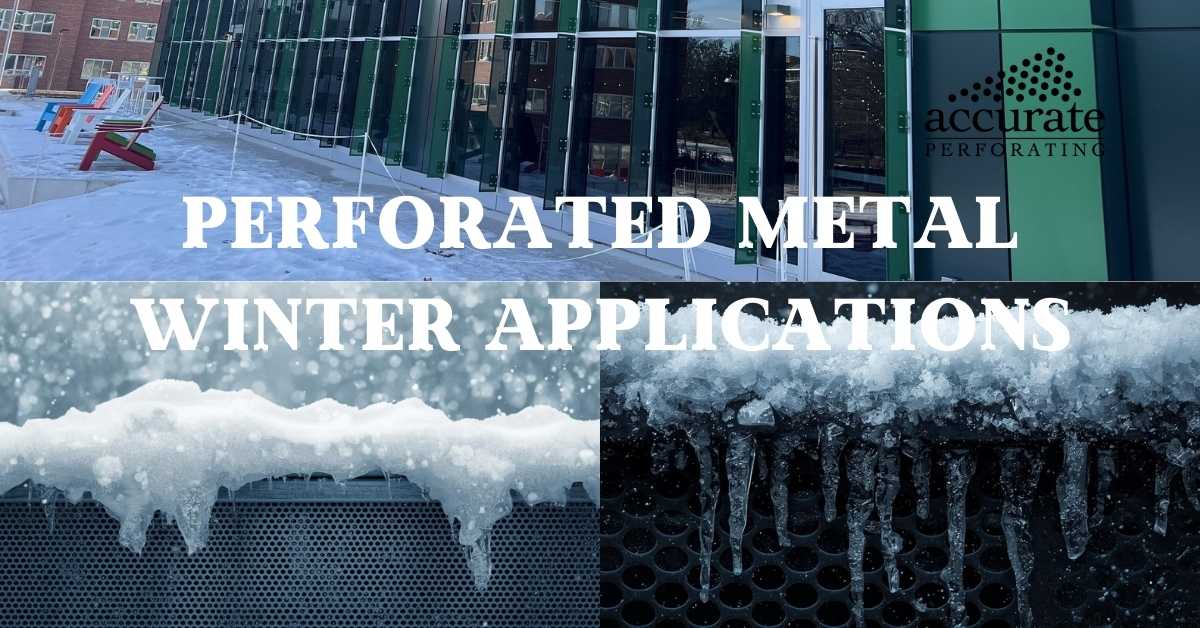
Winter conditions can be punishing on building materials. Snow, ice, freeze–thaw cycles, and reduced daylight all put stress on exterior components — making material selection even more critical for architects, builders, HVAC engineers, and facility managers. That's why perforated metal winter applications continue to gain momentum across commercial, industrial, and mixed-use projects.
Perforated metal offers a unique combination of durability, airflow, drainage, and visual appeal, making it exceptionally well-suited for cold-weather performance.
Perforated Metal Winter Applications: Durability Through Snow, Ice, and Freeze–Thaw Cycles
Perforated metal naturally sheds snow and ice, reducing surface load and minimizing freeze–thaw stress. Because snow and moisture can drain through the openings rather than accumulate on top, the panel's structural integrity remains intact even in harsh conditions.
Metals such as aluminum, galvanized steel, and stainless steel provide added resilience thanks to built-in corrosion resistance. With the proper finishing method — such as powder coating or anodizing — perforated panels maintain their performance and appearance throughout winter and beyond.
Snow Guards and Grating Designed for Winter Performance
Whether on commercial rooftops or industrial walkways, snow management is one of the most valuable cold-weather applications for perforated metal. Its open-area design makes it a natural fit for:
- Snow guards that reduce sliding hazards on sloped roofs
- Walkway grating that allows snow and ice to melt and drain instead of accumulating
- Service platforms and catwalks in utility or manufacturing settings
Because snow and ice pass through the perforations, traction improves, and the risk of slipping or excessive weight-loading decreases significantly. This makes perforated metal one of the safest and most efficient materials for winter accessibility.
How Perforated Metal Enhances Exterior Façades in Cold Weather
Façade designers choose perforated metal not only for its visual texture but also for its winter-ready performance. The material helps buildings manage seasonal conditions in several ways:
- Ventilation behind the façade system, reducing moisture and condensation
- Natural shedding of ice and snow, minimizing maintenance
- Dynamic shadow patterns, providing visual movement during periods of low sunlight
- Added protection for glazing, supporting energy efficiency and daylight control
For architects, these benefits make perforated metal an ideal partner to curtain walls, glazed façades, and mixed-material building envelopes — especially in climates with long, harsh winters.
Why Perforated Metal Excels in HVAC Intake Screens During Winter
HVAC systems must operate reliably even in extreme cold, where incoming air often carries snow, sleet, and wind-driven ice crystals. Poorly designed screens can clog or freeze, reducing system performance and driving up energy costs.
Perforated metal solves these challenges by offering:
- Optimized open-area flow to keep air moving
- Resistance to ice accumulation, thanks to unobstructed perforations
- Snow filtering, preventing packed or wind-driven snow from entering the system
- Lower maintenance needs, reducing strain on mechanical components
Engineering teams can specify the hole pattern, metal type, and open area percentage to achieve the right balance of filtration and airflow for winter operation.
Parking Garage Façades That Handle Winter Moisture and Salt Exposure
Parking structures face some of the harshest winter conditions — snow tracked inside on vehicles, road salt corrosion, moisture, and freezing air. Perforated metal provides a highly effective façade solution by enabling:
- Natural ventilation to manage humidity and car exhaust
- Faster drying, reducing the formation of ice patches
- Improved durability against corrosive winter road treatments
- An architectural aesthetic that blends with the surrounding building elements
In mixed-use developments, perforated metal façades help parking areas integrate visually with retail, residential, or office spaces while delivering the ventilation performance required by code — even in bitter winter weather.
Built for Winter. Ready for Anything.
From snow guards to HVAC screens, façade systems to parking garage ventilation, perforated metal winter applications deliver year-round durability and reliability. Its unique ability to manage moisture, airflow, and freeze–thaw conditions makes it one of the most versatile materials available for winter construction and retrofits.
If your next project needs a material that can handle winter's toughest challenges, perforated metal is engineered to outperform.