
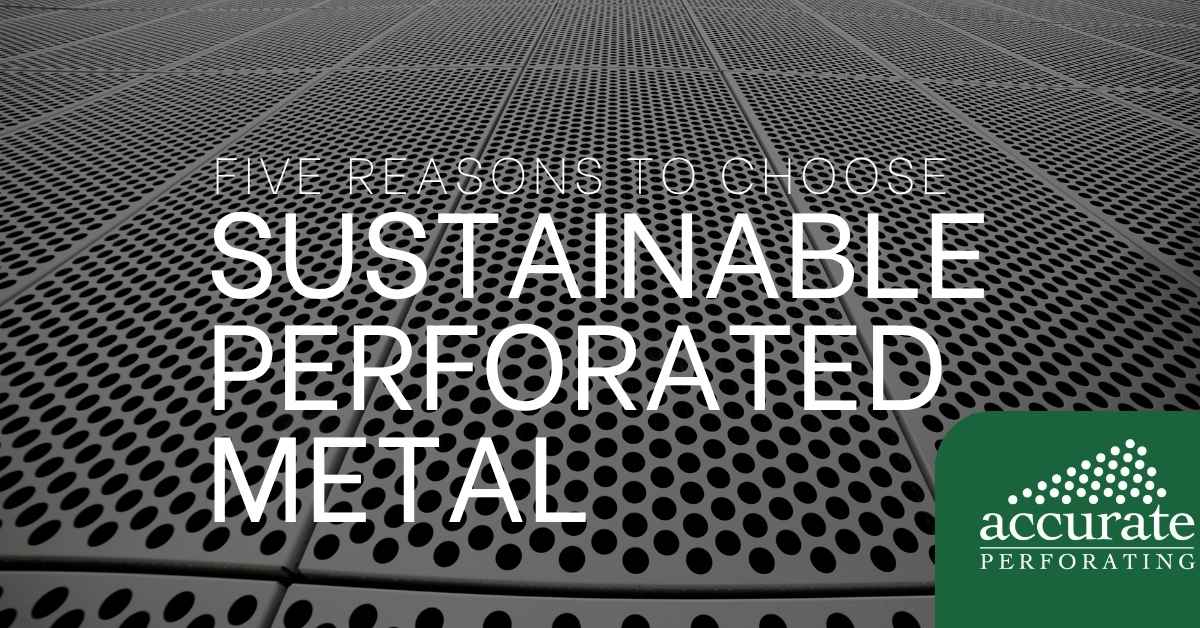
Sustainable perforated metal is gaining attention this Earth Day as architects look for practical ways to improve building performance without sacrificing design flexibility. From façades and sunshades to data centers and screening applications, perforated metal supports airflow, light control, and long-term durability.
Here are five reasons it continues to be specified in modern building design.
1. It Supports Natural Ventilation
Airflow is a key component of building performance, especially in exterior applications like façades and parking structures. Perforated metal allows air to circulate naturally through the building envelope, helping reduce heat buildup and, in some cases, reliance on mechanical ventilation systems. This makes it a valuable material in designs that prioritize passive airflow strategies.
2. It Helps Balance Daylighting and Solar Control
Managing sunlight is critical for both occupant comfort and energy efficiency. Too much direct sun increases your air conditioning bill in the summer, while too little natural light reduces usability and overall tenant happiness. Perforated metal sunshades help strike that balance. By filtering sunlight rather than blocking it entirely, they reduce glare and solar gain while still allowing daylight to enter the space. With the right pattern and open area, architects can fine-tune how light interacts with the building throughout the day.
3. It Plays a Critical Role in Data Center Efficiency
As data centers continue to expand, managing airflow and temperature efficiently has become a major sustainability challenge. Perforated metal is widely used in data center environments to support airflow management and cooling performance. From server rack panels to containment systems and ventilation components, perforated metal helps regulate airflow through high-density equipment.
By enabling more efficient cooling, perforated metal can help reduce energy consumption — one of the largest drivers of data center operating costs and environmental impact. This makes it an important material not just for performance, but for building more energy-efficient digital infrastructure.
4. It's Built for Long-Term Durability
Sustainability isn't just about how something is made — it's also about how long it lasts. Perforated metal architectural panels are designed to perform in exterior conditions, with materials like aluminum and stainless steel offering strong resistance to corrosion and weathering. Protective finishes further extend lifespan.
The result is a material that requires less maintenance and fewer replacements over time, supporting long-term building performance.
5. It's Recyclable and Supports Circular Material Use
Another key advantage of sustainable perforated metal is its recyclability. Aluminum and steel are among the most widely recycled materials in the world. At the end of their service life, perforated metal panels can be reprocessed and reused in new applications, reducing waste and supporting circular material strategies.
A Practical Approach to Sustainable Design
A single solution doesn't drive sustainability in architecture — it's the result of thoughtful material choices and performance-driven design. From improving airflow and managing sunlight to supporting data center efficiency and long-term durability, perforated metal offers a practical way to contribute to more sustainable buildings.