
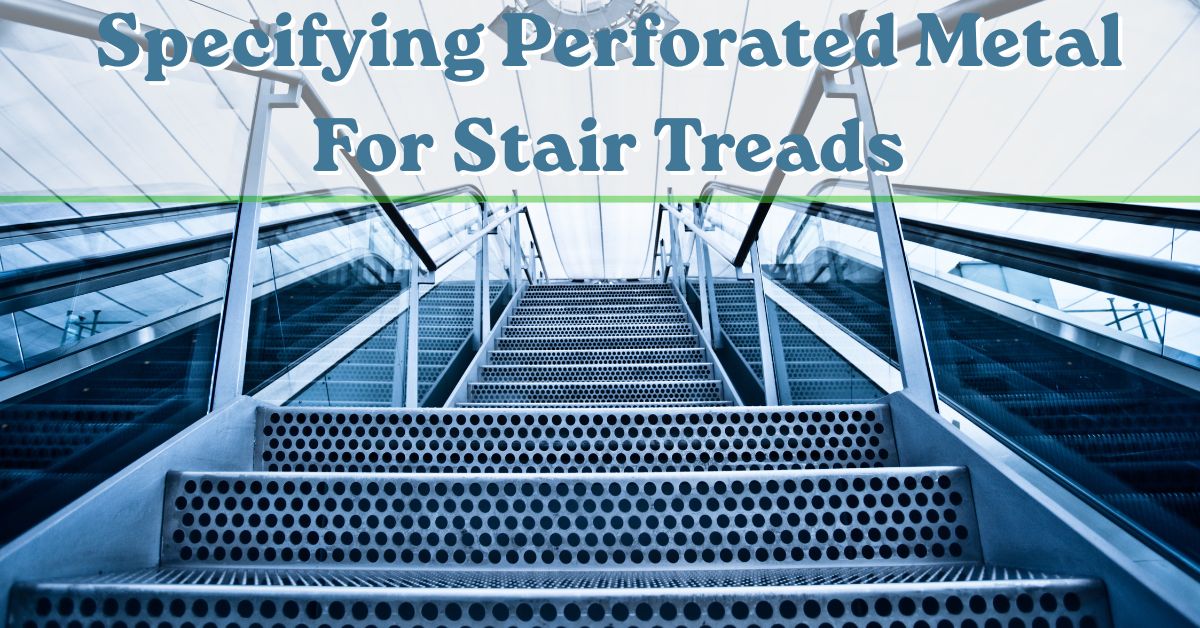
Specifying perforated metal stair treads starts with understanding how the stair system will be used, where it will be installed, and what performance requirements matter most. Stair treads may seem like a straightforward component. Still, the right material, pattern, finish, and fabrication details can make a major difference in safety, durability, drainage, and long-term performance.
For architects, designers, contractors, and builders, perforated metal stair treads offer a practical combination of strength, slip resistance, airflow, and visual appeal. They can be used in industrial facilities, commercial buildings, schools, transit spaces, public walkways, and architectural stair systems where performance and design both matter.
Here are the key factors to consider before specifying them.
1. Start with the Environment
The first question is simple: Where will the stair treads be installed?
Interior and exterior stair systems have different demands. Interior treads may prioritize appearance, cleanability, and coordination with railings or risers. Exterior treads need to handle rain, snow, ice, temperature swings, and exposure to the elements. For outdoor stairs, perforated metal can be especially valuable because its openings allow water, snow, and debris to pass through rather than collecting on the walking surface. That drainage helps reduce buildup and supports safer footing in high-traffic environments.
2. Choose the Right Material
Material selection plays a major role in how stair treads perform over time. Common options include aluminum, carbon steel, galvanized steel, and stainless steel.
- Aluminum is lightweight and corrosion-resistant, making it a strong option for architectural applications where weight is a concern.
- Galvanized steel offers durability and corrosion protection for exterior or industrial environments.
- Stainless steel offers excellent corrosion resistance and is often used when long-term performance and a clean appearance are priorities. The best choice depends on the project's location, exposure, budget, and structural needs.
3. Consider Thickness and Load Requirements
Stair treads need to do more than look good. They need to support regular foot traffic, meet project requirements, and hold up over time. Material thickness should be selected based on the span, expected load, support structure, and the application. A stair tread used in a public transit station will have different requirements than one used in an office building. This is where early collaboration matters. Working with an experienced perforator and fabricator can help ensure the selected material and thickness align with both performance expectations and manufacturing realities.
4. Understand Open Area and Hole Size
Open area refers to the percentage of the sheet that is open versus solid. In stair treads, the open area affects drainage, airflow, visibility, weight, and traction.
A higher open area may improve drainage and reduce weight, but it also needs to be balanced with strength and walking comfort. Hole size matters, too. Larger perf holes may allow more water or debris to pass through, while smaller openings may provide a more comfortable walking surface and a tighter visual appearance. The goal is to choose a pattern that supports the stair tread's function without compromising safety or durability.
5. Think About Slip Resistance and Drainage
Safety is one of the biggest reasons designers specify perforated stair treads. The pattern helps reduce standing water, snow, dirt, and debris on the surface. For exterior applications, drainage is especially important. Perforated treads can help prevent puddling and reduce the chance of slick surfaces after rain or snow. In industrial or commercial settings, this can also make routine cleaning easier. Depending on the application, safety grating may be used to enhance traction further.
6. Select a Finish for the Application
The finish protects the material and supports the final appearance of the stair system. Powder coating, galvanizing, anodizing, and other finishing options can improve durability, corrosion resistance, and design flexibility. For exterior stair treads, the finish should be selected with weather exposure in mind. For architectural interiors, color, texture, and coordination with surrounding materials may be just as important. A good finish does more than complete the look. It helps extend the tread's service life.
7. Plan for Risers, Railings, and Adjacent Panels
Stair treads rarely exist alone. They often need to coordinate with risers, railings, guardrails, infill panels, or surrounding architectural metalwork.
If the project includes perforated metal risers or railing panels, it is worth thinking about the full system early. Coordinating patterns, finishes, and fabrication details can create a more unified look while simplifying production and installation. The finish is especially important for public-facing architectural projects where the stair system is part of the overall design language.
8. Talk to Accurate Early
The best time to discuss perforated stair treads is before the design is fully locked in. Early input can help identify the right material, thickness, pattern, open area, and finish before drawings move too far along.
At Accurate Perforating, we help customers evaluate their requirements and manufacturing options so their stair components are designed with both function and fabrication in mind. From perforating and forming to finishing and integration with risers or railing panels, our team can support the details that make the final system work.
Build Safety and Performance into the Specification
Perforated metal stair treads can improve safety, drainage, durability, and design flexibility when they are specified correctly. By considering the Environment, material, thickness, open area, finish, and surrounding components early, architects and builders can avoid unnecessary changes later in the project.